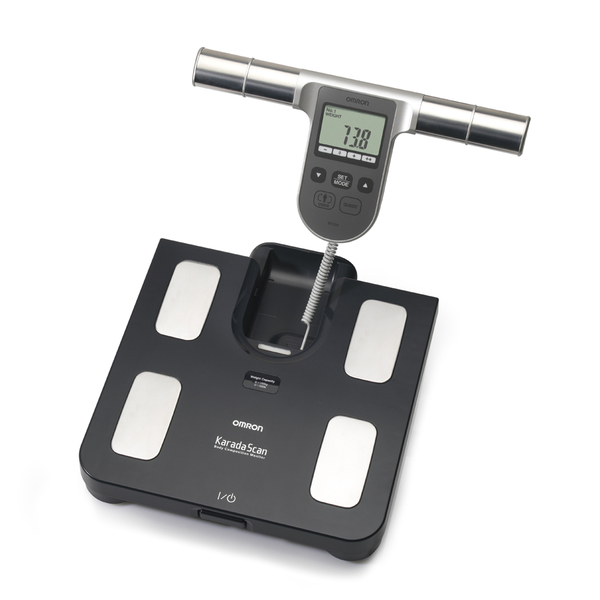
Omron BF 508 Body Composition Monitor
Request a Quote
Clinically validated Body fat and classification BMI and classification Visceral fat and classification 4 user memory 8 sensor technology Age range 18-80 ye
Request a QuoteProduct Overview
The Omron BF 508 Body Composition Monitor is a clinically validated device designed to measure body fat percentage, BMI, and visceral fat levels.
It features 8 sensor technology for accurate readings and has a memory capacity for up to 4 users.
Suitable for individuals aged 18 to 80 years, this monitor provides essential body composition data for health management.
Its user-friendly interface makes it easy to operate in both clinical and home settings.
Applications & Use Cases
This body composition monitor is used for tracking health metrics and managing weight.
It is suitable for healthcare professionals in hospitals and clinics, as well as for personal use in home healthcare settings across Nairobi and other regions of Kenya.
Dietitians, fitness trainers, and individuals focused on health improvement can benefit from its detailed insights.
The device aids in assessing health risks associated with body fat and BMI.
Care & Maintenance
To maintain the Omron BF 508, keep the device in a dry, clean place when not in use.
Wipe the surface with a soft, damp cloth to remove dust or stains.
Avoid exposure to extreme temperatures and humidity.
Regularly check the batteries and replace them as needed to ensure accurate readings.
Store the monitor in its original packaging or a protective case to prevent damage during transport.
Frequently Asked Questions
How much do vital signs cost?
Continuous Vital Signs Monitors can cost anywhere from $1000 to upwards of $10,000 depending on the model and features. The good news is most Continuous Vital Signs Monitors are modular, which means you can choose which modules to initially purchase to fit your budget..
What is the price of Mindray vs 600 vital signs monitor?
Brand: Mindray VS 600 Vital Signs Monitor, Display Size: 90x90 Mm at ₹ 65000 in Pune..
What is the difference between a patient monitor and a vital sign monitor?
Vital signs monitors track basic physiological data, while patient monitors provide advanced parameters such as ECG and capnography for sedation and complex procedures..
What are the types of diagnostic equipment?
Healthcare professionals use Diagnostics Equipment such as stethoscopes, blood pressure monitors, thermometers, otoscopes, ophthalmoscopes, and diagnostic imaging equipment like X-ray machines and ultrasound scanners to assess and diagnose patients' conditions..